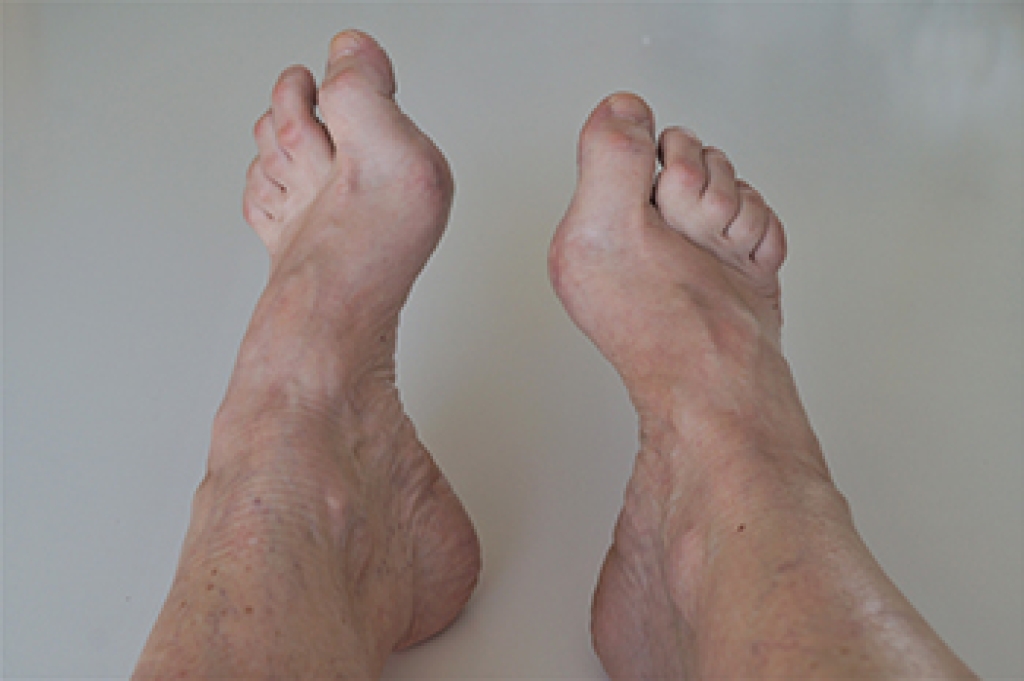
Foot deformities occur when the bones, joints, muscles, and ligaments that support the foot move out of their normal position. The foot is built to be strong and flexible so it can support body weight and allow smooth walking. When its structure changes, the shape of the foot and the way a person walks may also change. Several types of foot deformities can develop. A splayfoot occurs when the bones in the front of the foot spread apart, making the forefoot wider. Flat feet develop when the arch, the curved area under the foot that helps absorb shock, becomes lowered. High-arched feet have an arch that is higher than normal and place more pressure on the heel and ball of the foot. Some deformities, such as clubfoot, are present at birth. Others develop over time due to injury, arthritis, tight shoes, or repeated strain on the feet. A podiatrist can evaluate foot structure and recommend treatment to improve comfort and walking ability. If you have a foot deformity, it is suggested that you make an appointment with a podiatrist for an exam, diagnosis, and treatment.
If you have any concerns about your feet, contact One of our podiatrist from Santi Podiatry Group. Our doctors can provide the care you need to keep you pain-free and on your feet.
Biomechanics in Podiatry
Podiatric biomechanics is a particular sector of specialty podiatry with licensed practitioners who are trained to diagnose and treat conditions affecting the foot, ankle and lower leg. Biomechanics deals with the forces that act against the body, causing an interference with the biological structures. It focuses on the movement of the ankle, the foot and the forces that interact with them.
A History of Biomechanics
- Biomechanics dates back to the BC era in Egypt where evidence of professional foot care has been recorded.
- In 1974, biomechanics gained a higher profile from the studies of Merton Root, who claimed that by changing or controlling the forces between the ankle and the foot, corrections or conditions could be implemented to gain strength and coordination in the area.
Modern technological improvements are based on past theories and therapeutic processes that provide a better understanding of podiatric concepts for biomechanics. Computers can provide accurate information about the forces and patterns of the feet and lower legs.
Understanding biomechanics of the feet can help improve and eliminate pain, stopping further stress to the foot.
If you have any questions please feel free to contact our offices located in on 5th Street and Kings Highway Brooklyn, NY . We offer the newest diagnostic and treatment technologies for all your foot and ankle needs.

